International Conferences Organized by the Department

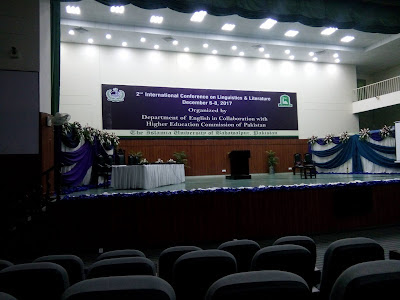
Since its establishment in 2020, the Department has held national and international conferences. These conferences provide varied exposure of the discipline. 

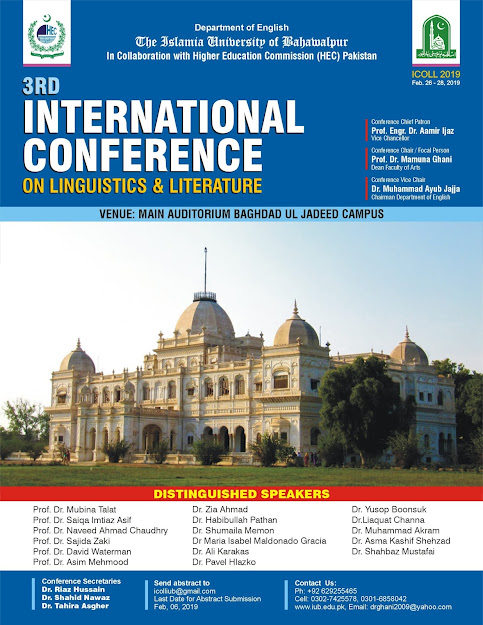
By organizing conferences, our mission is to bridge the gap between theoretical linguistics and practical language teaching methodologies in a post-pandemic world. Over the years, we hosted our distinguished and esteemed delegates from Türkiye, Malaysia, Indonesia, Kingdom Saudi Arabia,the Sultanate of Oman, Albania,  Algeria, Central Asia, Azerbaijan, France, USA, UK, Poland, China, South Africa and Thailand. The following conferences were organized by the Department:

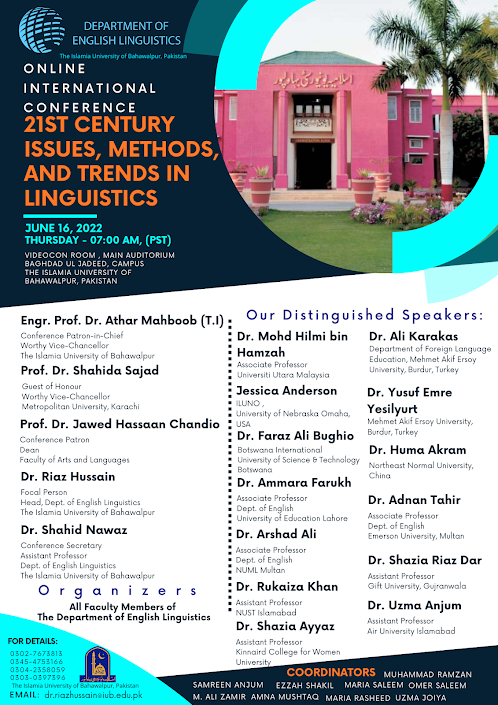
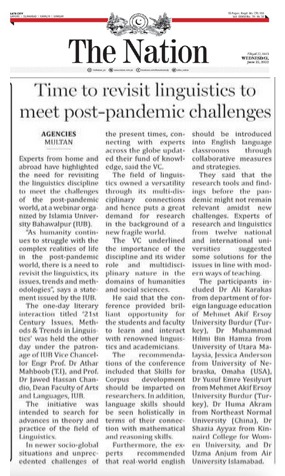
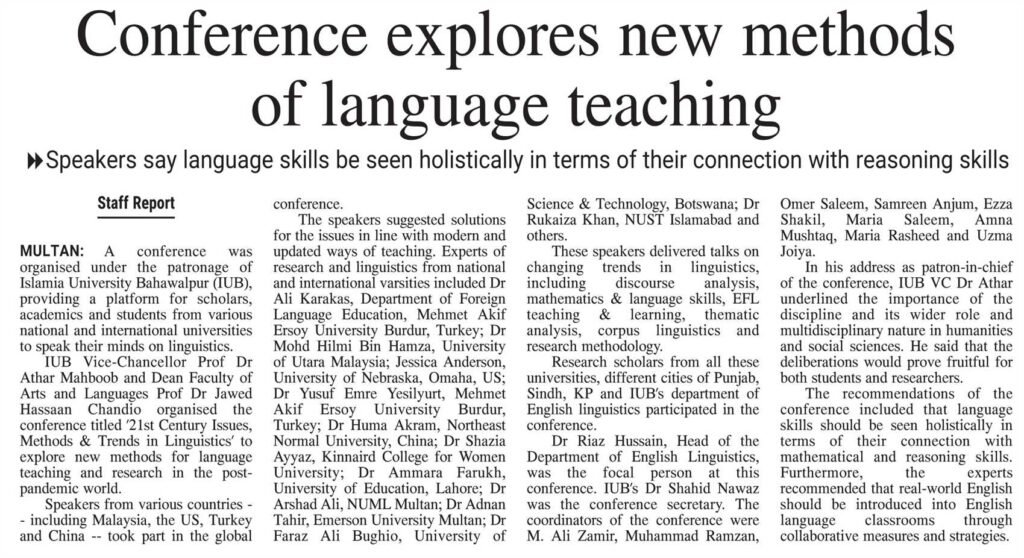
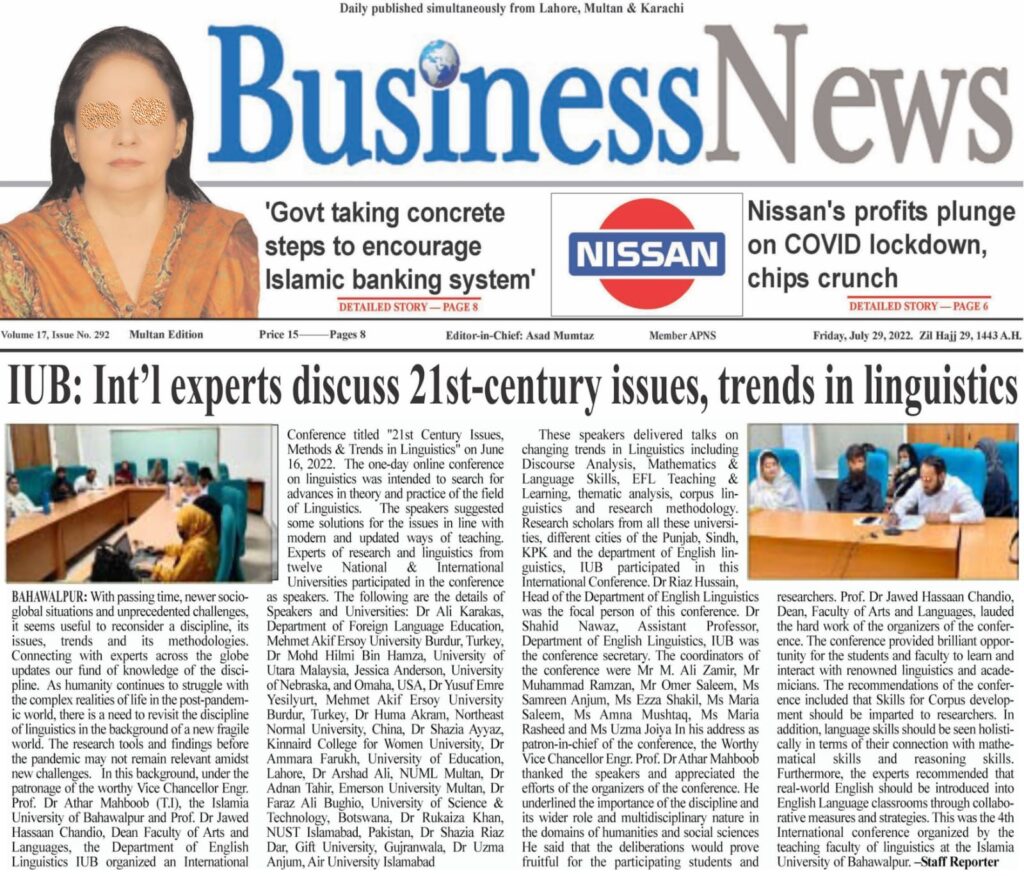
  1. ‘Online International Conference on 21st Century Issues, Methods & Trends in Linguistics’ on June 16, 2022
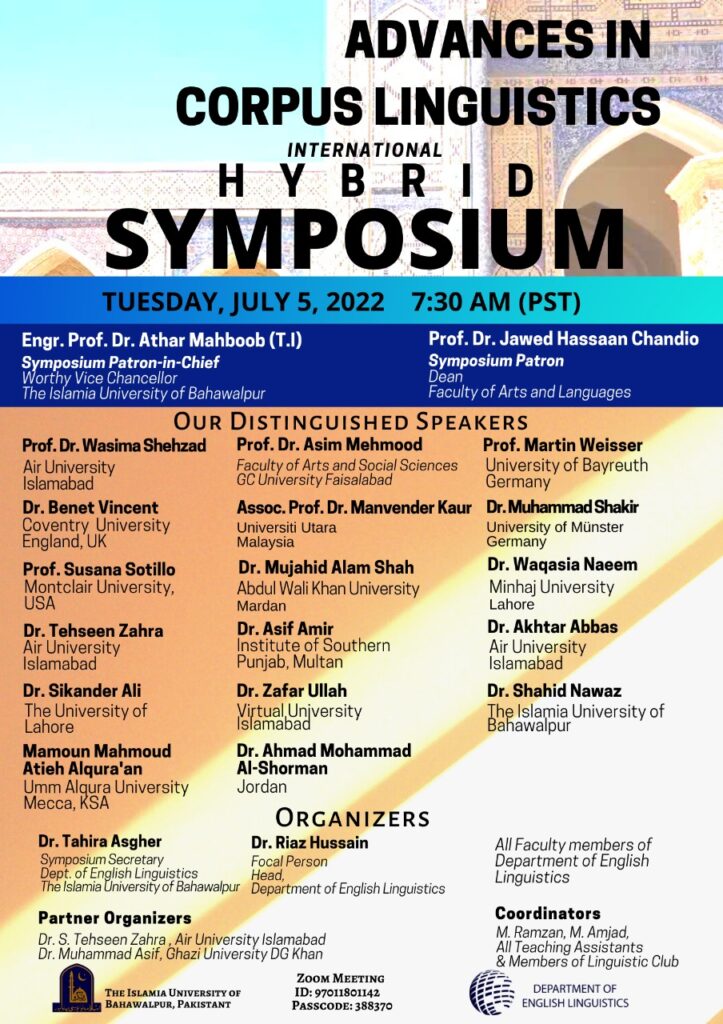
  2. International Symposium on ‘Advances in Corpus Linguistics’, July 05, 2022
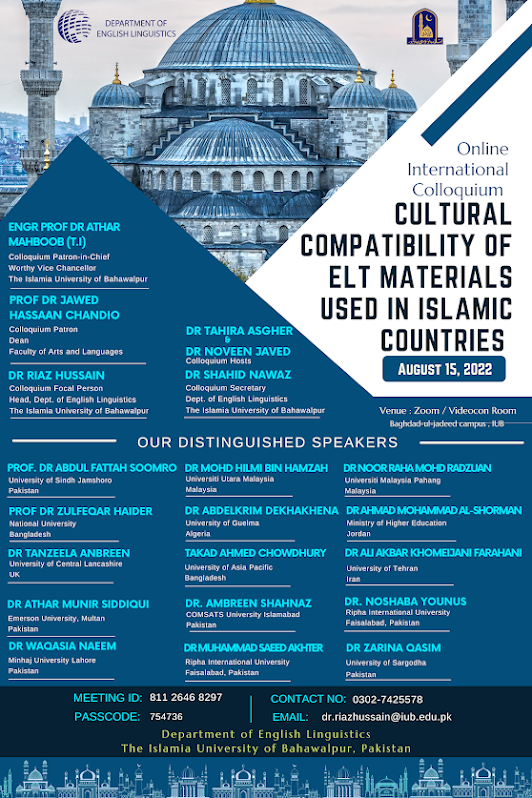
  3. Online international Colloquium on Cultural Compatibility of ELT Materials Used in Islamic Countries, August 15, 2022
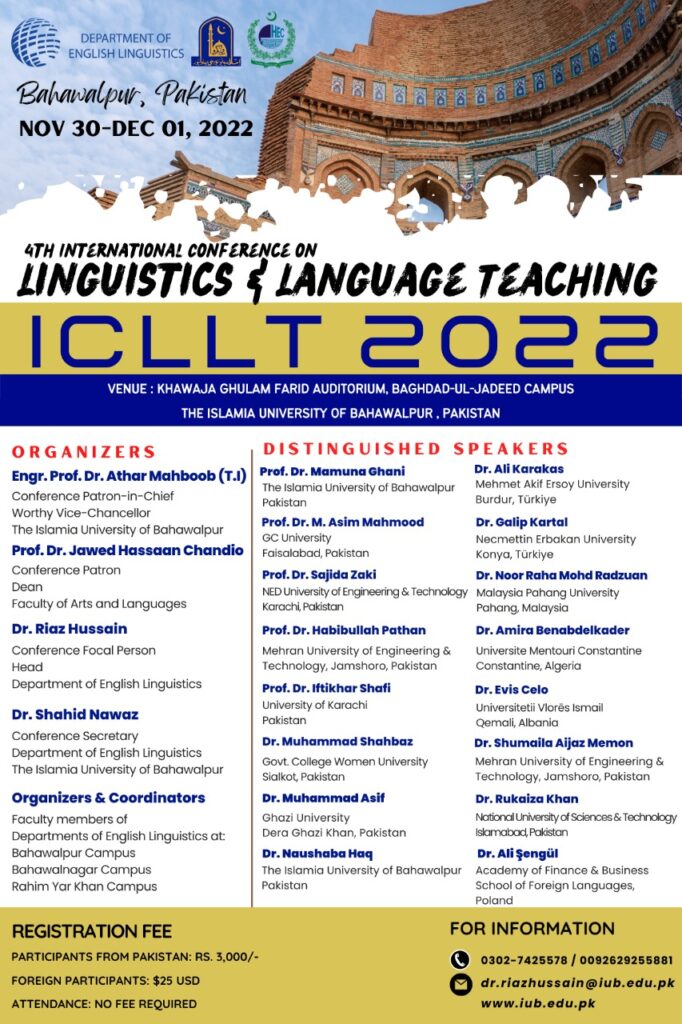
  4. ‘International Conference on Linguistics & Language Teaching’ November 30-December 1, 2022
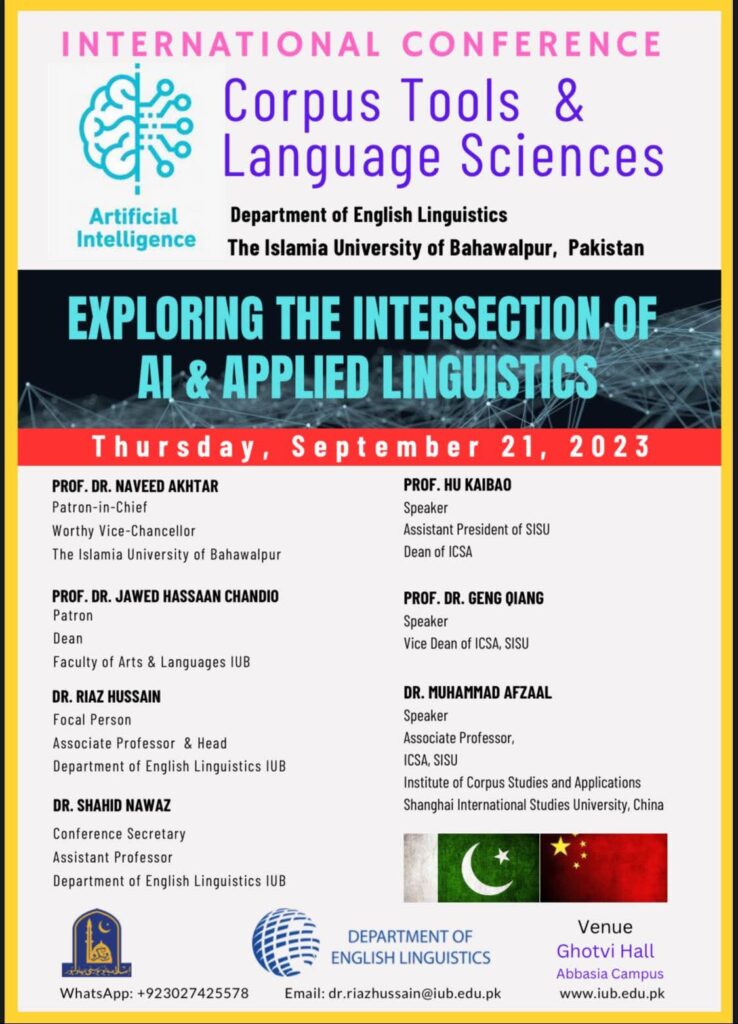
  5. ‘Corpus Tools and Language Science: Exploring the Intersection of AI & Applied Linguistics’, September 21, 2023

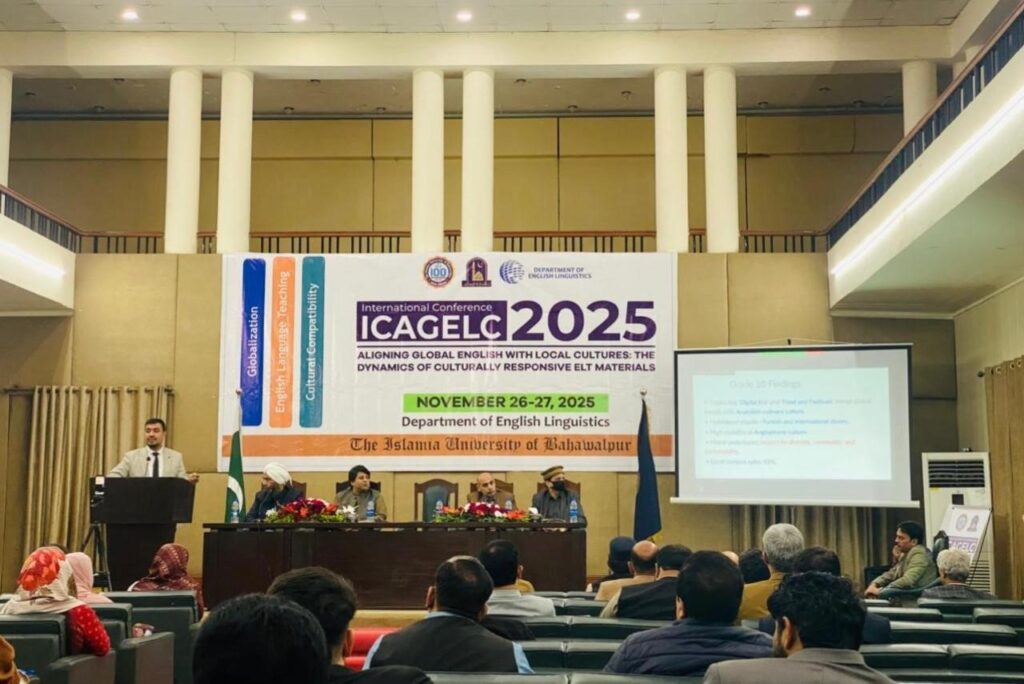
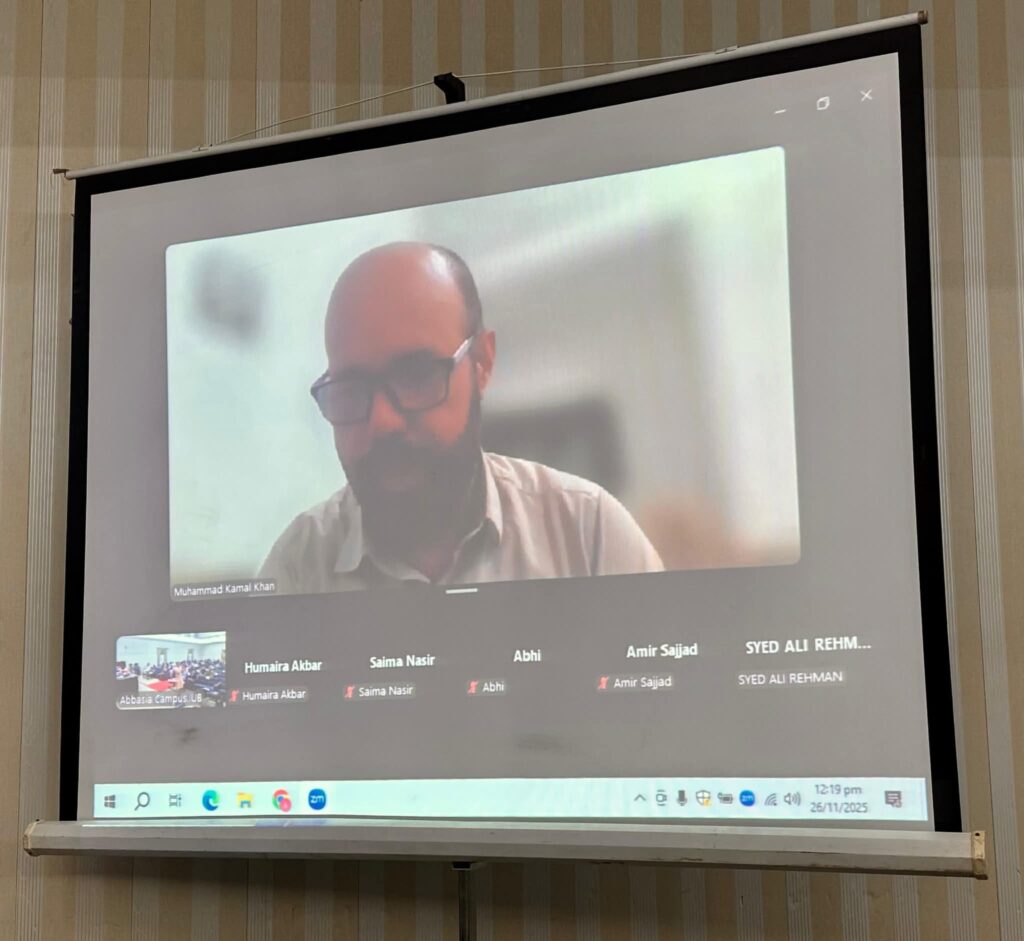
  6. ‘International Conference on Aligning Global English with Local Cultures: The Dynamics of Culturally Responsive ELT Materials’, Nov 26-27, 2025

Keynote Speakers
0
Countries Involved
0

'Jewel of Faculty of Arts & Languages'

Academic events at our department reflect the unyielding determination of our institution to promote research and learning in southern region of Punjab. The journey towards excellence has borne fruits now in the form of scintillating galaxy of the scholars and graduates serving in high ranking universities of Pakistan. The graduates of this department are serving in 02 international and 27 national universities. The culmination of the transformative drive launched by IUB is beautifully seen in the academic congregations at the department.

Outcomes and Benefits of the Conferences

The Department’s conferences and scholarly engagements have created meaningful opportunities for students to connect classroom learning with current developments in linguistics, language teaching, research, and emerging technologies. These academic activities have strengthened students’ research and analytical skills, enhanced their ability to engage with contemporary scholarship, and improved their academic writing, presentation, communication, and critical-thinking abilities. Students have gained exposure to diverse research perspectives and developed greater confidence in discussing academic ideas with scholars, teachers, and fellow researchers. The initiatives have also encouraged students to explore emerging areas such as corpus linguistics, artificial intelligence, digital language research, and culturally responsive language teaching. Through these engagements, students have been encouraged to develop research interests, participate more actively in scholarly activities, and prepare for postgraduate research, academic careers, language teaching, and professional opportunities in a rapidly evolving global environment.

t.

1st International Conference on Linguistics & Language Teaching, November 25-27, 2013

Recommendations

1. There is a need to regulate the teaching of languages in Pakistan by establishing a council for English teachers / language teachers / linguists / on the pattern of ‘Pakistan Engineering Council’.

2. To facilitate intercultural communication among people of the four provinces and to neutralize language conflicts in Pakistan, the government should encourage plurilingualism.

3. To facilitate intercultural communication among people of the four provinces and to neutralize language conflicts in Pakistan, the government should encourage plurilingualism.

4.Indigenized foreign language learning software and teaching material should be developed to reduce the cognitive load on the minds of the learners.

5. Keeping in view the demand of Urdu in the Arab countries of the Persian Gulf, there is a need to promote and facilitate learning of Urdu in the Arab countries of the Persian Gulf in the form of USP (Urdu for Specific Purpose) courses.

6. Audiovisual aids should be used in English language classrooms to maximize language learning.

7.There is a need to strengthen long-standing linguistic and cultural ties with the central Asian states.

8.There is a need to encourage studies that focus on similarities between Urdu and Central Asian languages.

9. Similar conferences should be held on regular basis for profitable exchange of ideas and experiences.